Tonnetz
Understand Harmony – Visualize It – Apply It
Chords, voicings, and harmonic relationships often seem complicated because they're usually explained in abstract terms. The Tonnetz takes a different approach:
👉 The Tonnetz becomes a visual and interactive framework that lets you not only analyze harmony, but immediately apply it in practice.
🎼 Why the Tonnetz?
Many musicians know scales, chords, and functional harmony — yet still lack a strong internal sense of orientation when playing. The Tonnetz helps you:
- Voice and connect chords with intention
- Create and resolve tension consciously
- Develop voicings in a logical way
- Visualize harmonic structures instantly
- Extract chords from hybrid scales and traditional tonal systems
- Recognize geometric shapes as musical patterns
- Shape harmonic tension deliberately — including pendulum harmony concepts
- Identify harmonic relationships much faster than through traditional tertian analysis
- Visualize hexatonic relationships, such as those found in the augmented scale
- Recognize triad pairs, polychords, and reinterpretation possibilities
- Apply these concepts directly to II–V–I progressions and the half-whole diminished scale
👁️ See It Instead of Calculating It
Triads and seventh chords emerge from clear spatial patterns within the Tonnetz. Concepts that are usually taught through formulas and scale degrees become immediately visible as tangible structures.
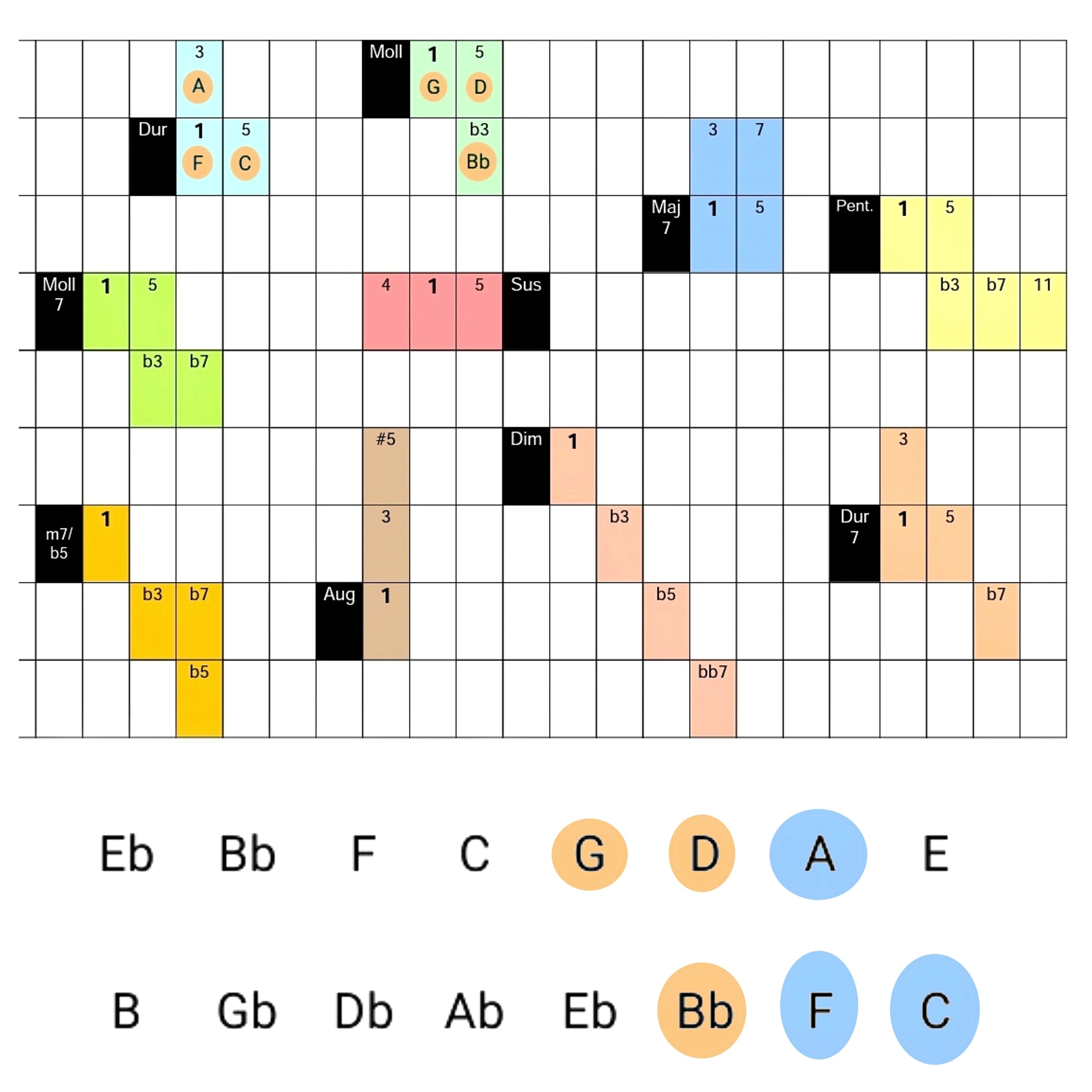
➡️ The result: you recognize chords faster and use them more flexibly. Hear more, discover more, and play more with the same notes.
🎷 The Tonnetz in Action: II–V–I
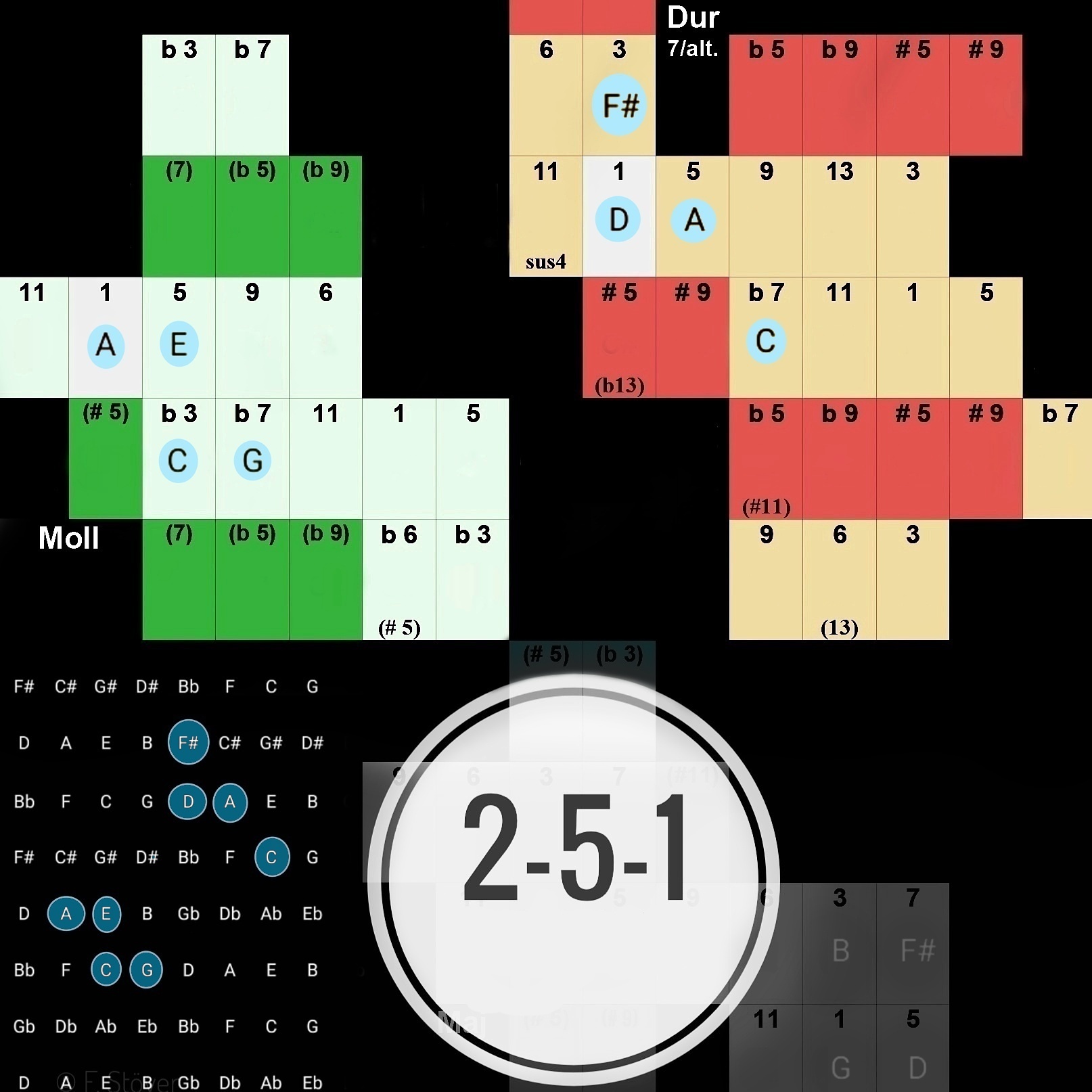
The classic II–V–I progression becomes visible in the Tonnetz as a connected flow of motion (guideline). Instead of thinking in isolated chords, you begin to perceive harmony as a continuous movement. The Tonnetz functions as:
- A navigation system
- An improvisational map
- A starting point for your own ideas
🔥 Using Tension Intentionally: The Altered Scale
Within the Tonnetz, the altered scale no longer appears as an abstract scale concept, but as a concrete harmonic sound field. This allows you to:
- Select tensions intentionally (triad pairs) and integrate alterations directly into voicings
- Hear and understand why certain sounds work — including chromatic relationships and semitone structures
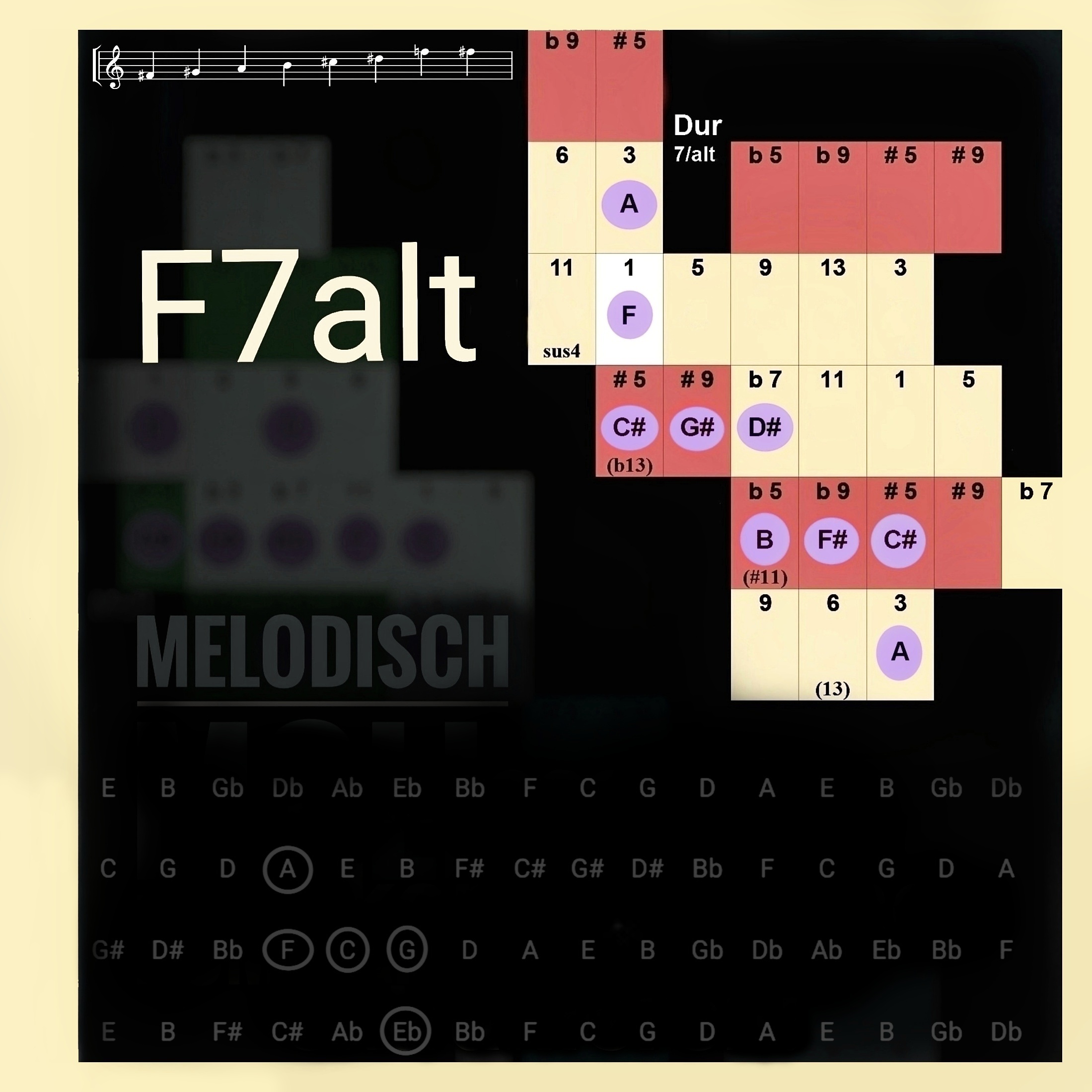
👉 Ideal for practical playing over dominant chords.
🎹 Creative Applications: Hexatonics
Even advanced concepts such as triad pairs can be derived from simple hexatonic structures within the Tonnetz. In this context, the Tonnetz becomes:
- A tool for improvisation
- A source of new voicing ideas (slash chords)
- A bridge between theory and practical musicianship
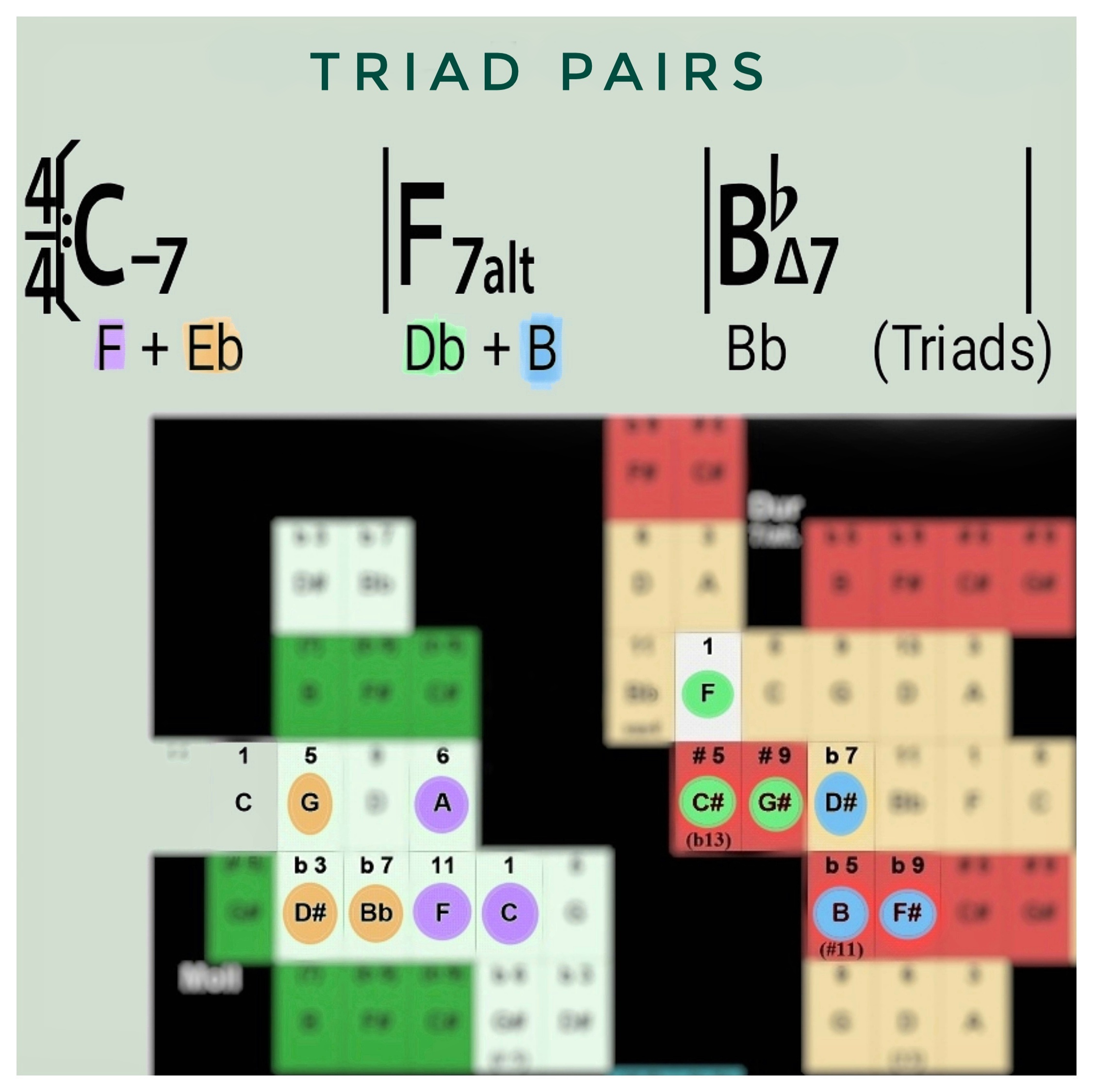
👉 If you want to practice triad pairs, use the Pendulum as a harmonic oscillation tool to repeatedly cycle through triads or seventh chords. For example, over C9 you could play: Gm + C + Gm + C + etc. Harmonic combinations can be identified quickly and intuitively within the Tonnetz.
One of the many ways to explore the Euler Tonnetz is through the visualization of slash chords.
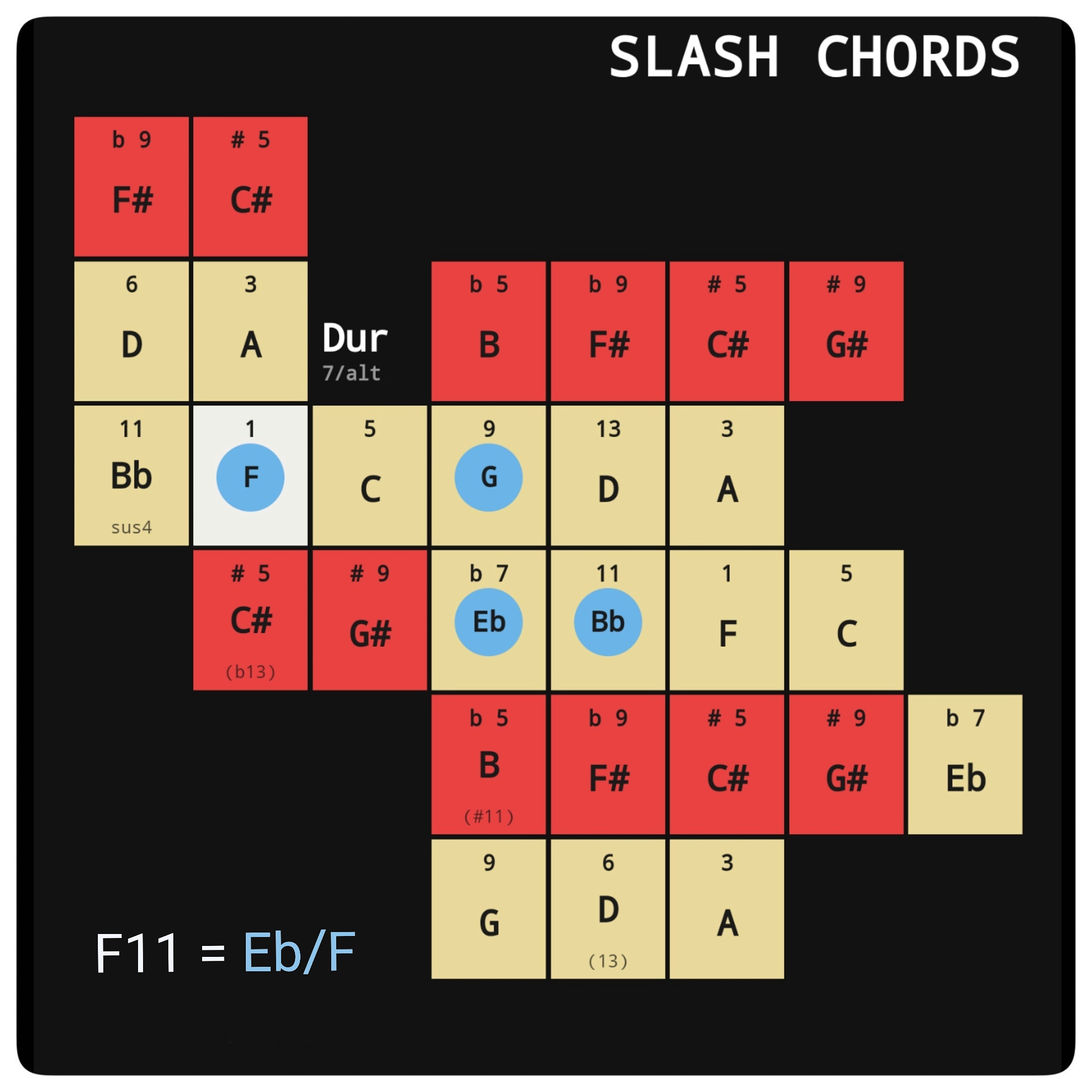
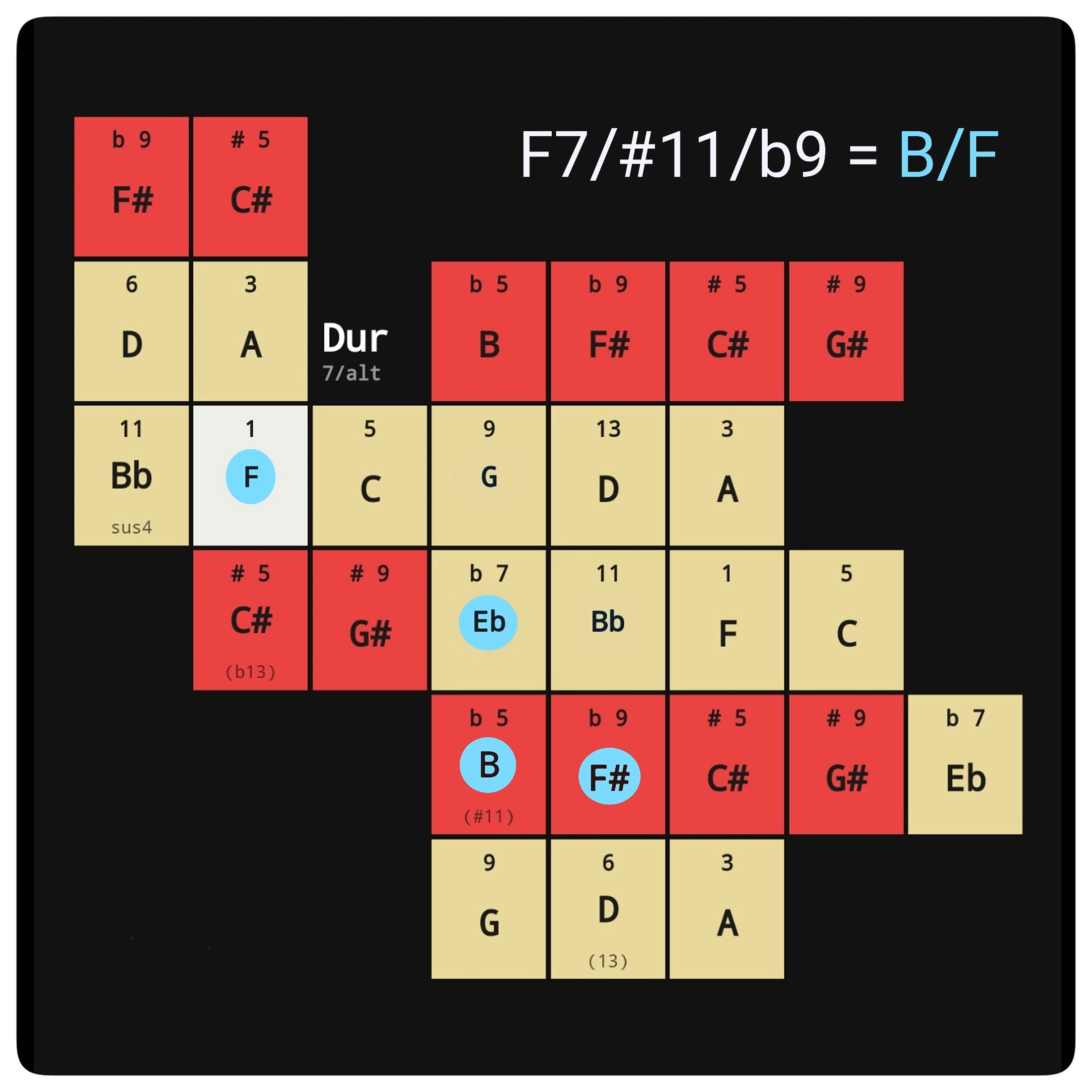
The interactive tool below offers a quick glimpse into how individual slash chords can be mapped and visualized on the Tonnetz, revealing their internal structure and their relationship to the surrounding harmonic landscape.
→ Open Slash Chords Tool