Example
From Hexatonic Structures
to Dominant Chords
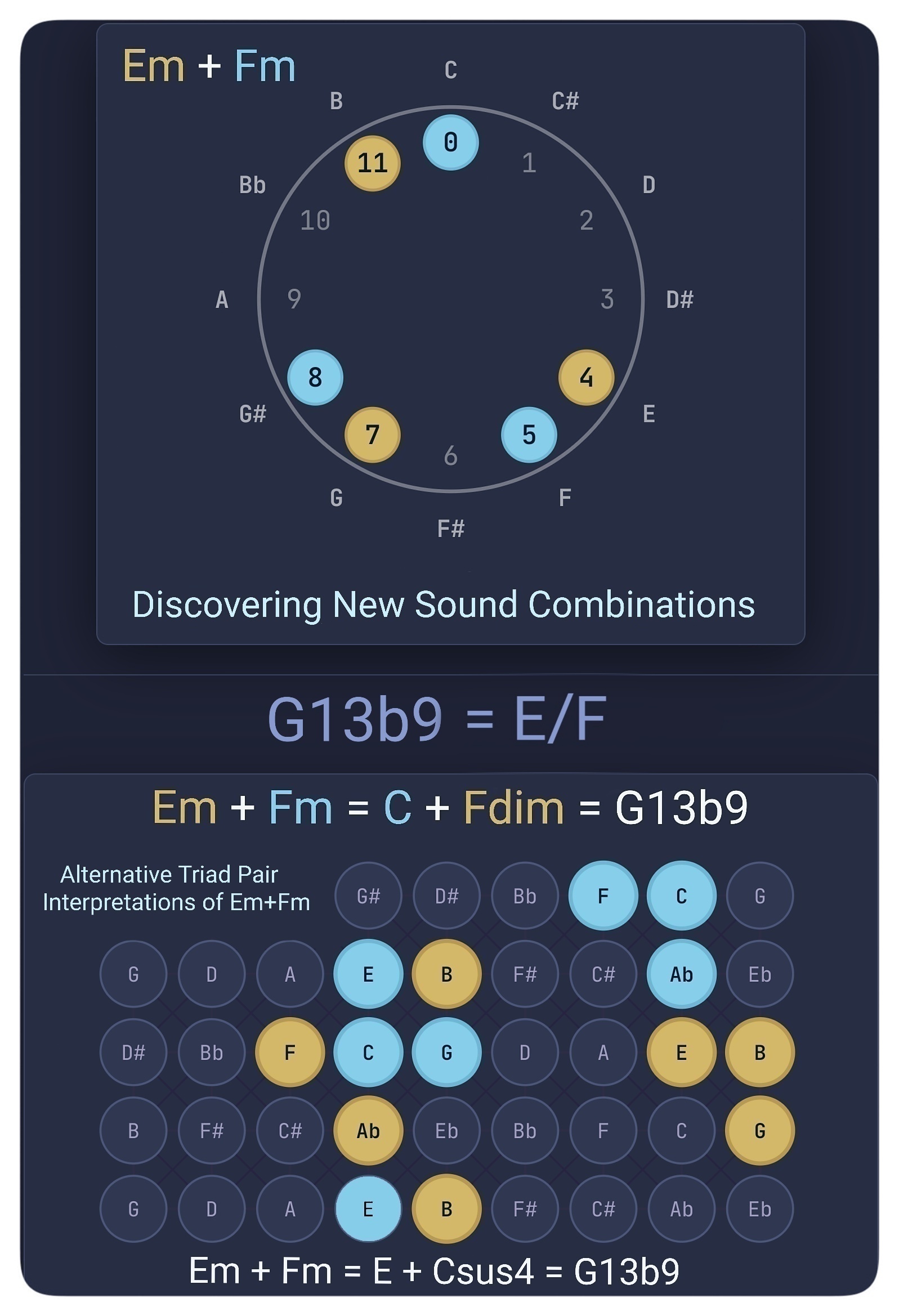
The following example illustrates how rearranging the notes of two triads—such as Em and Fm—can reveal additional triad pair interpretations, including C + Fdim and E + Csus4.
Even though all of these structures are derived from the same hexatonic collection, they can produce distinctly different melodic and improvisational results.
For example, there is a noticeable difference in sound between playing a line based entirely on Em + Fm over a G13b9 chord and combining Em + Fm with C + Fdim. While the note pool remains unchanged, the different triad pair groupings create new contours, accents, and harmonic colors within the line.
The current Amazon edition of the book contains numerous examples that showcase creative discoveries within hexatonic structures and the Tonnetz, revealing new possibilities for harmony, voicings, and improvisation.